





Context
A renovation takes something old and makes it look and feel new. The original form and function are preserved, but presentation and livability are updated for modern tastes and needs. Mid-century modern homes are among most architects’ favorite gems to refresh and restore; think expansive walls of glass, post-and-beam-construction, and soaring ceilings that just need dated floor plans or finishes brought into the 21st century.
Acorn Deck Houses, a Massachusetts-based company founded in 1947, designed and produced some of the first pre-fabricated MCM homes on the market. Their process proposed an alternative to traditional building methods that generated less waste and repurposed materials left over from World War II industries.
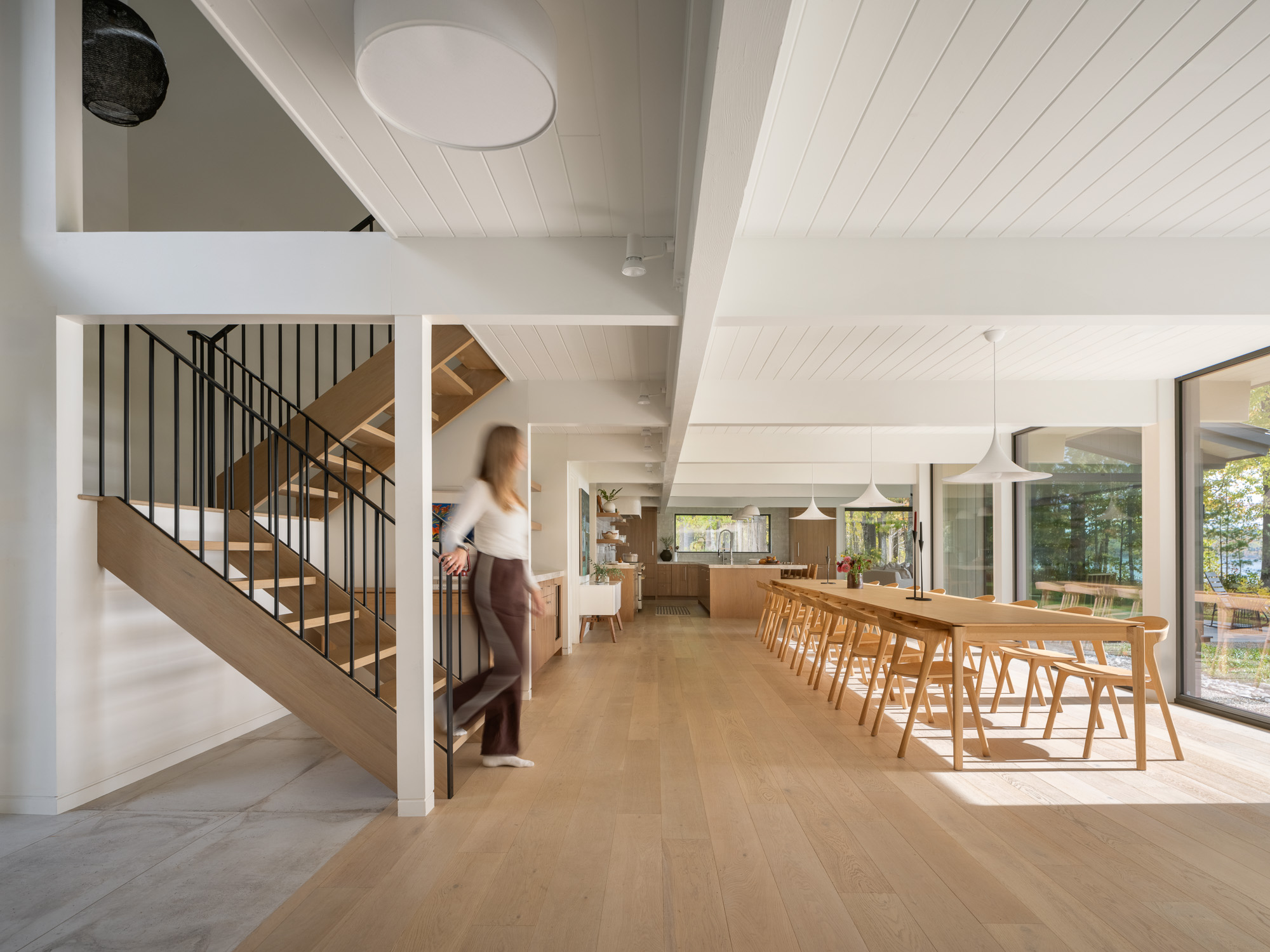
In 2020, our clients purchased a lakeside Acorn Deck House to serve as a multigenerational gathering space. The project began as a tear-down and rebuild; the existing home was less than forty years old but suffered from complex issues with moisture and insulation. Dark timber interiors, a cramped kitchen, and a layout defined by numerous structural columns made interior spaces feel low and narrow with seemingly few options for restructuring. During early design discussions, the owners reconsidered demolition only if the home could be meaningfully opened up without lowering the ceiling anywhere.
Essentially, we were asked to make a house levitate. So we did.
Response
Completed in three discrete phases to allow use each summer, Eagle Crest puts the “modern” back into an iconic mid-century modern home.
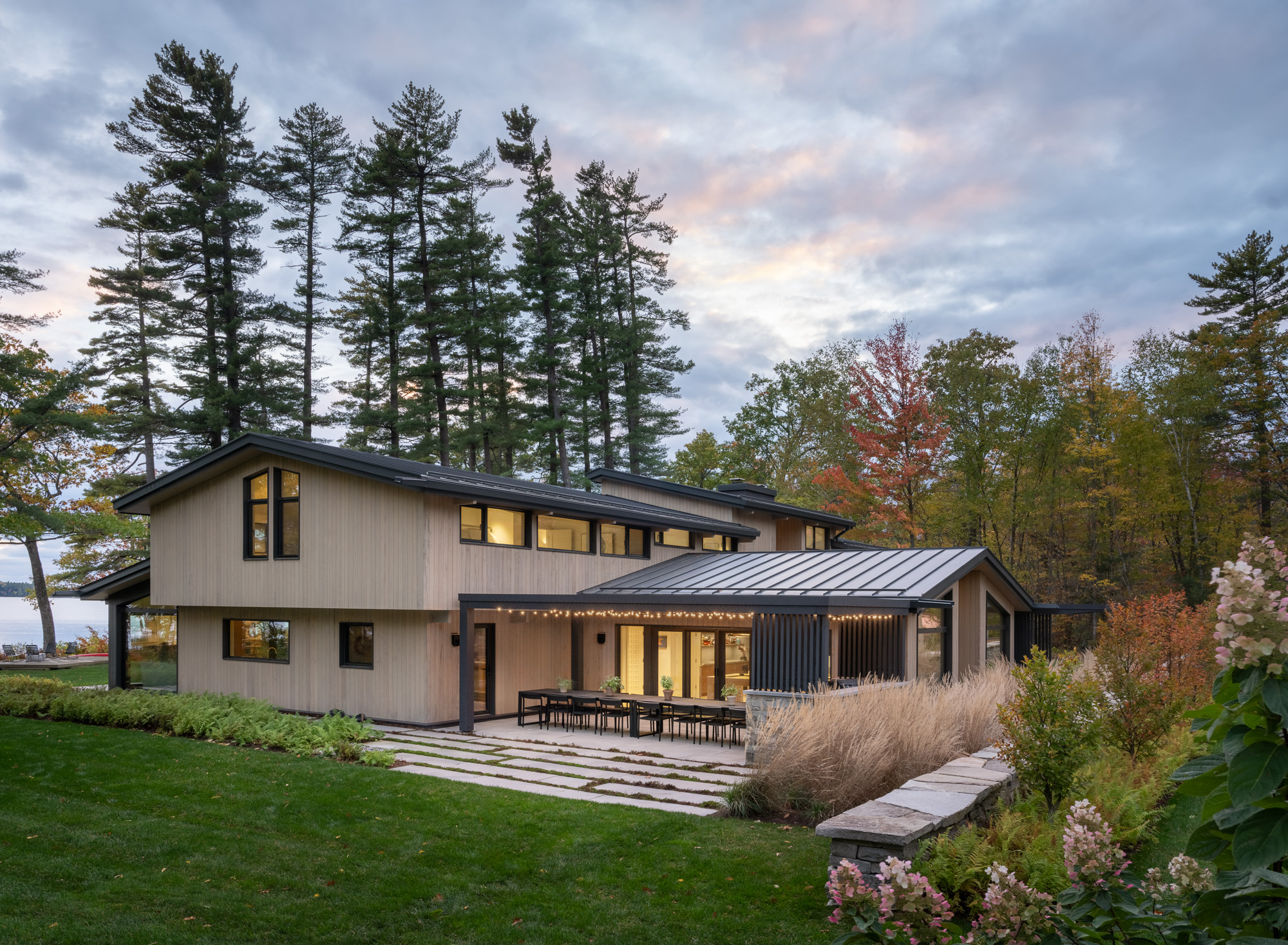
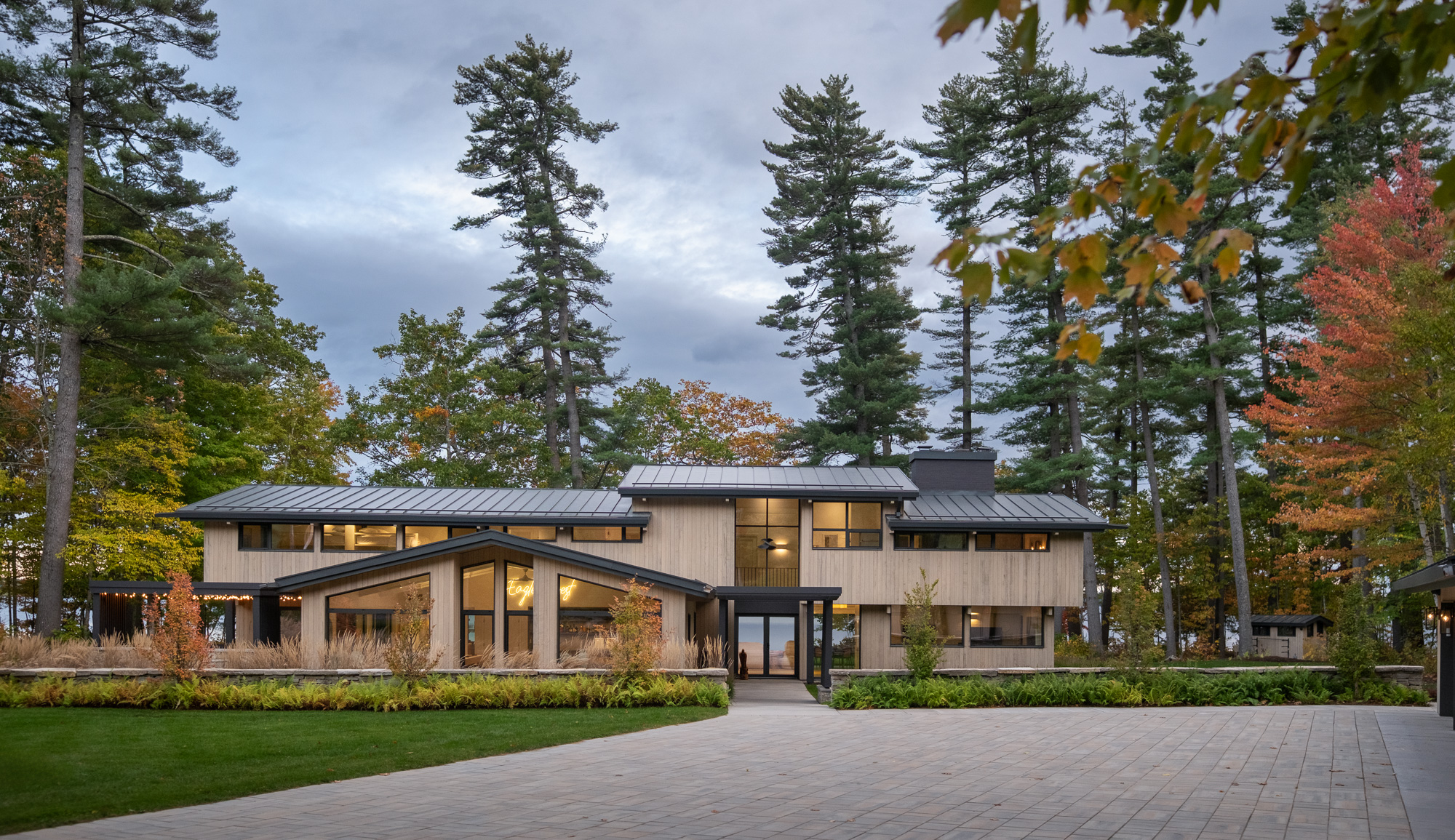
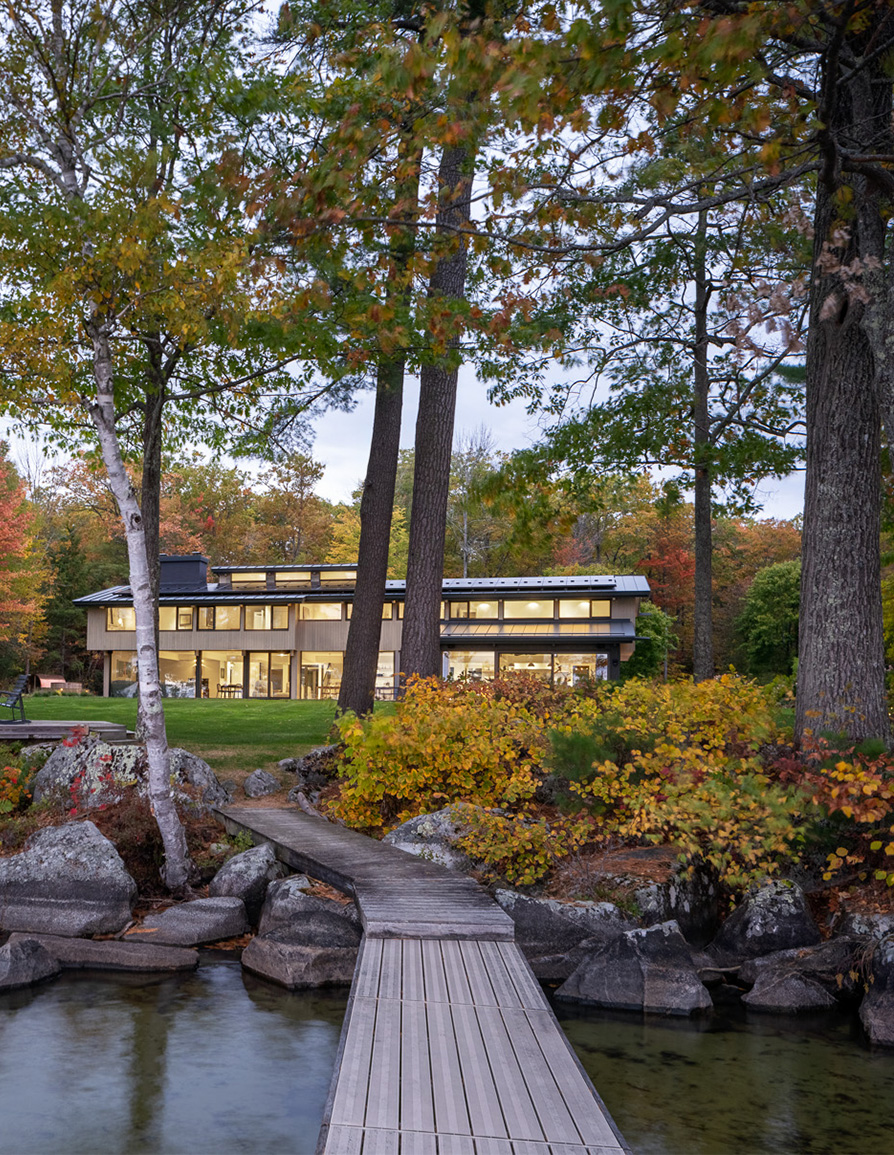
The building runs parallel to a shoreline with walls of glass lining the water-facing kitchen, living, and dining areas. Brightening and structurally de-cluttering the ground level required a highly surgical strategy. The original heavy timber beams ran continuously from interior to exterior, creating significant thermal bridges. Replacing them outright with steel would worsen thermal performance and invite condensation where the metal came into contact with cold air. Instead, several existing beam tails were spliced to a new interior structure made of concealed steel members clad in wood.
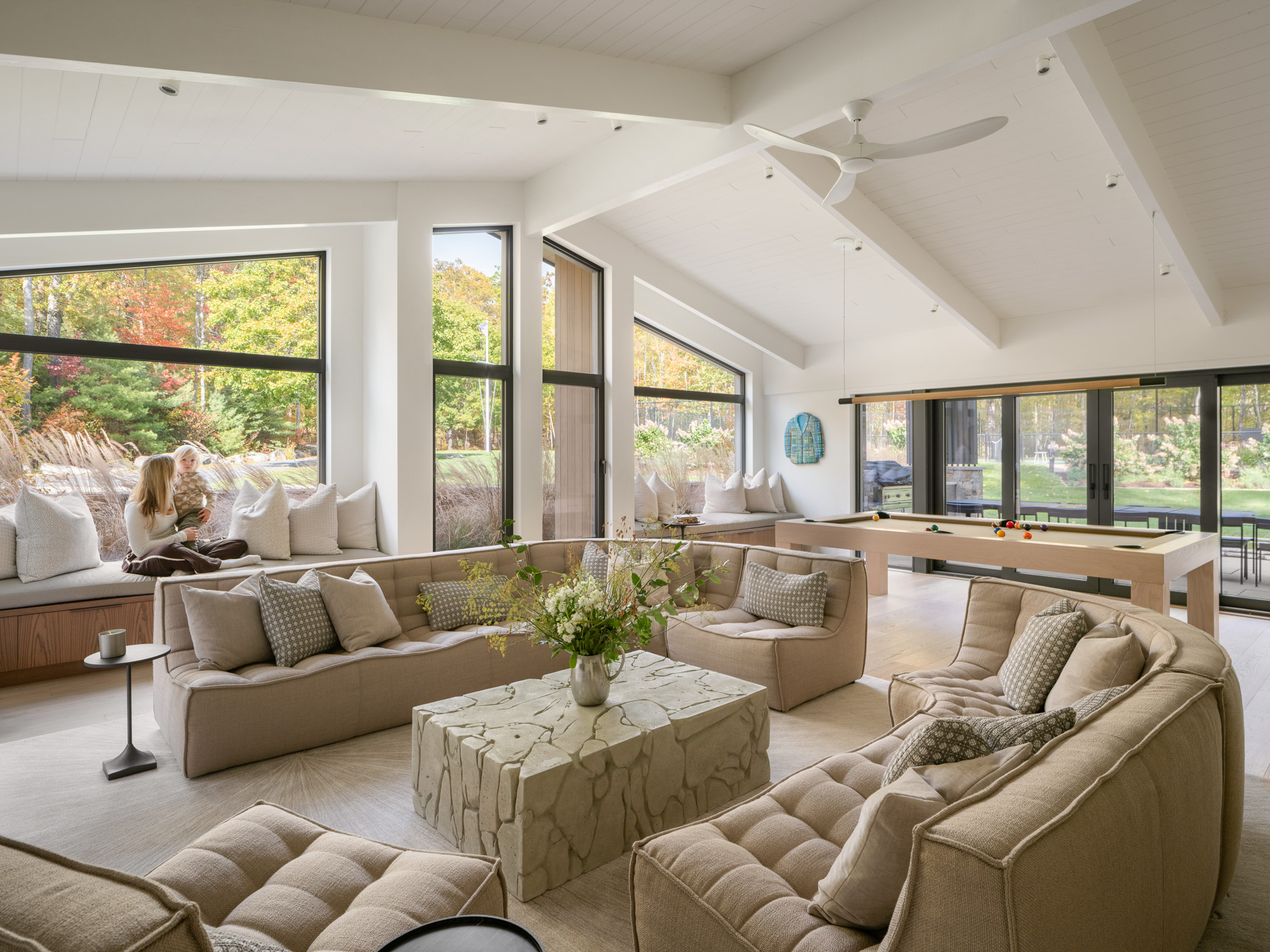
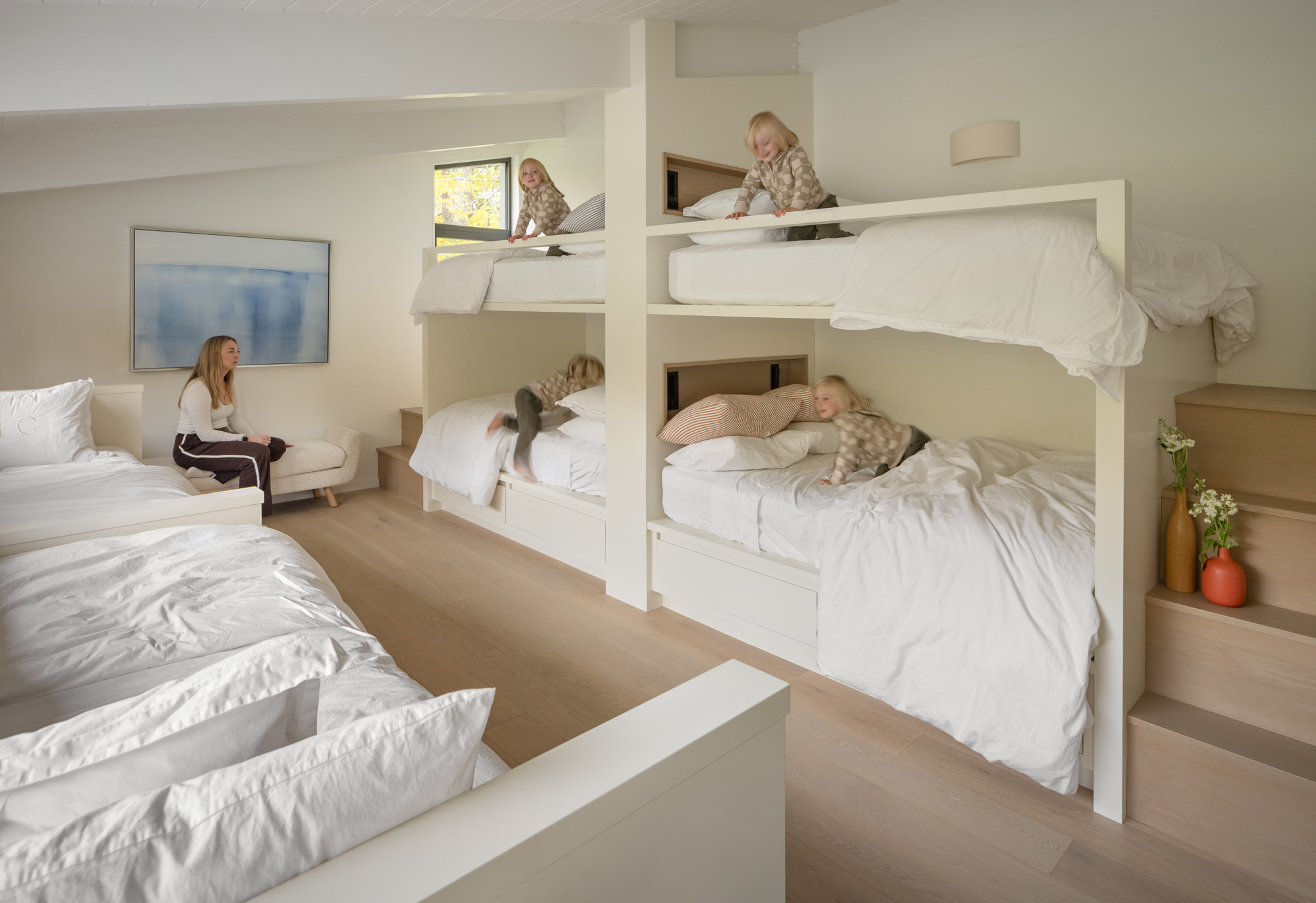
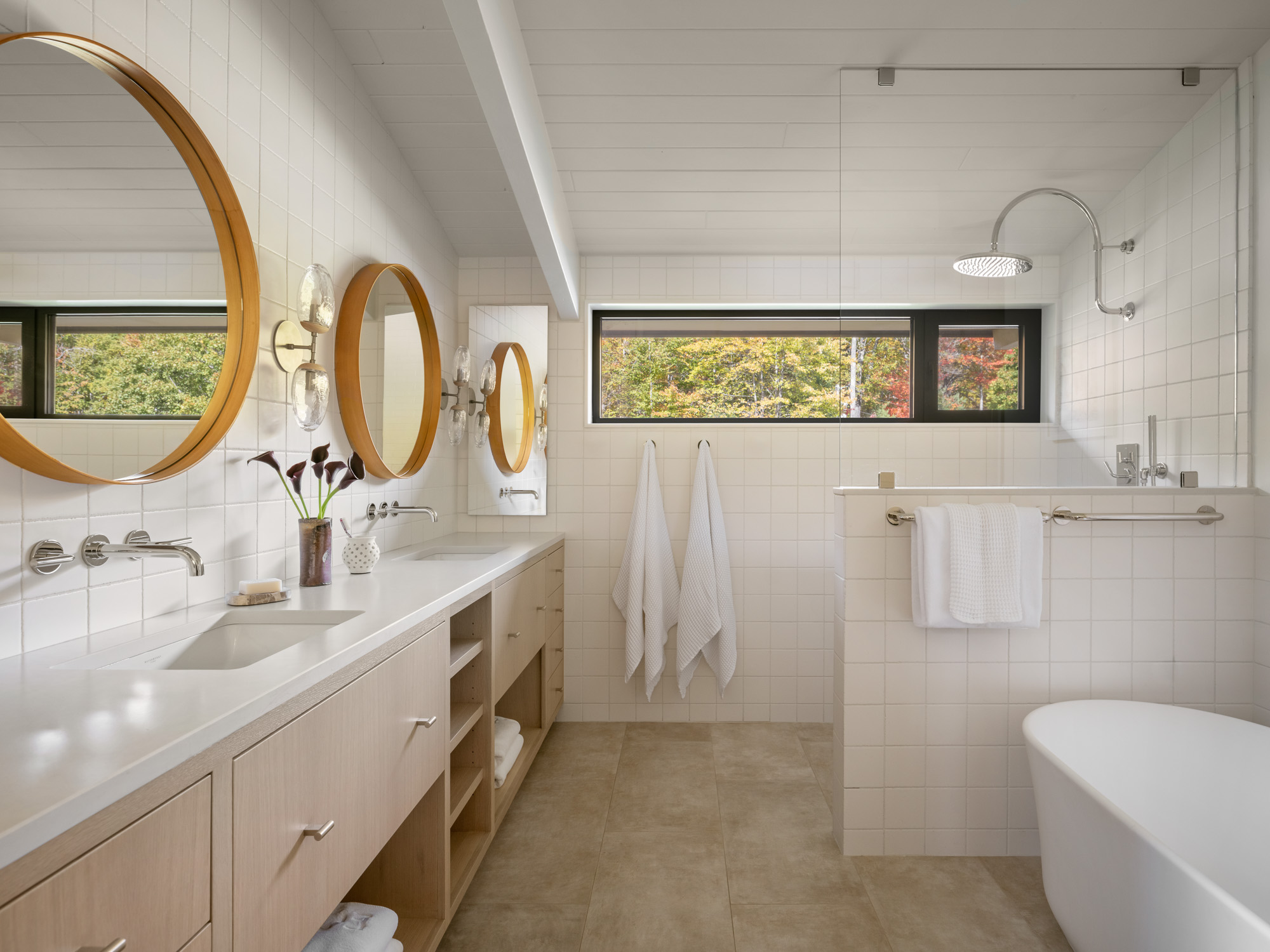
Four large structural columns were removed from the home’s 80-foot-long span, allowing an interior reconfiguration to open the floor plan and add new spaces for hanging out, working out, and passing out after a great meal and day on the water. We added two new bathrooms, expanded the kitchen, and rearranged the small, original bedrooms into a more thoughtful composition along the private water-facing facade. Dark and dated finishes were modernized with a soft, earthy palette rich in natural materials and subtly textured surfaces.
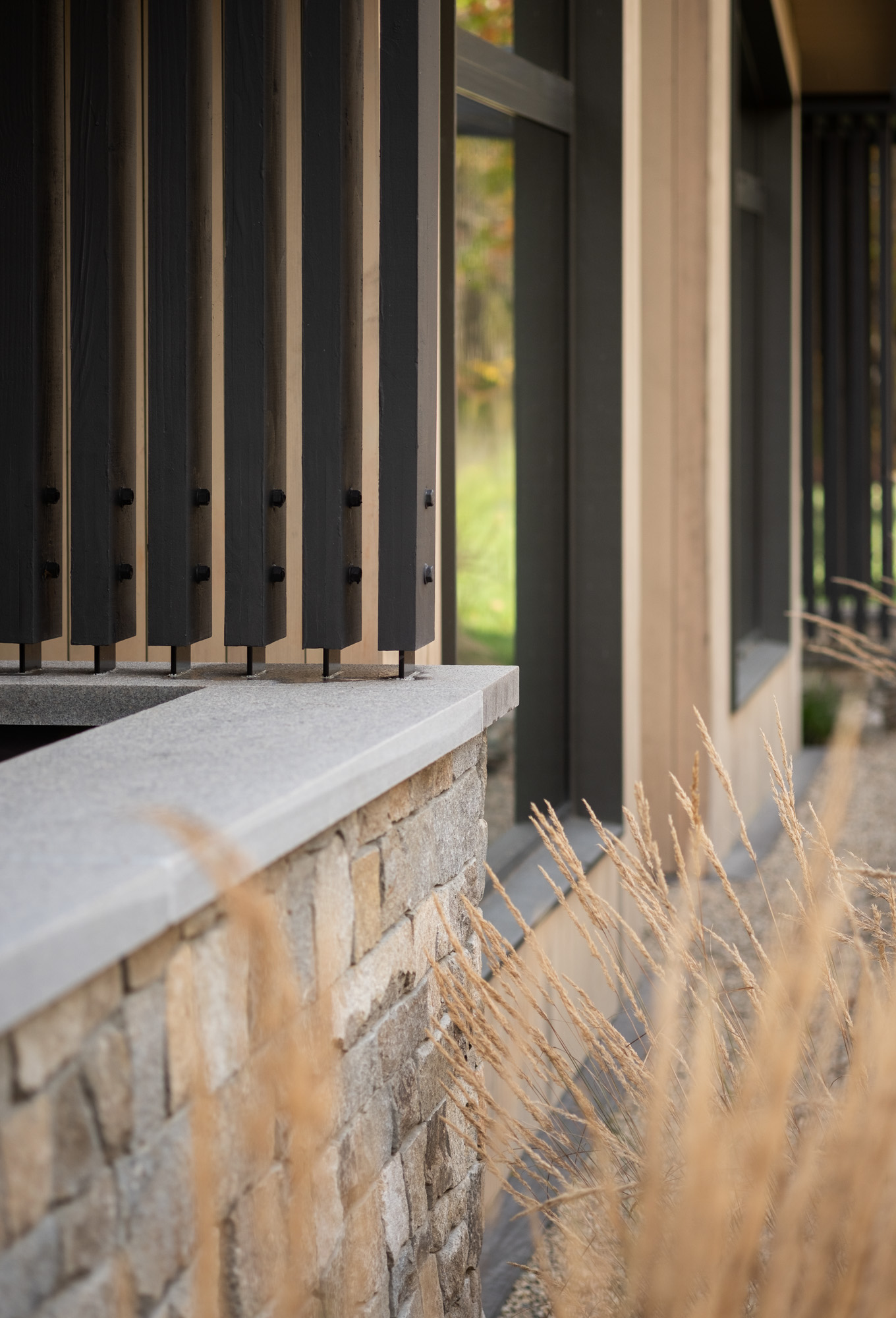
Eagle Crest’s newly superinsulated envelope approaches Passive House–level performance with exterior walls wrapped in four inches of locally produced wood-fiber insulation boards. The home is clad with a standing seam metal roof and thermally modified hemlock siding for durability and low maintenance. Respecting the original mid-century spirit, the design retains —and expands— its defining glass. Triple-glazed window units were added and mullions were eliminated, while a 24-foot lift-and-slide door and new outdoor living spaces strengthen connections to the waterfront. Beneath the building, exposed dirt floors were converted to a fully insulated crawlspace with new sub-grade drainage. The perfectly south-facing roofline is finished with a 15.1-kW rooftop solar array, allowing the renovation to achieve Net Zero Energy.