







Context
Lewiston, Maine, like many New England mill towns, was built then gutted by the industrial revolution. The closure of the Androscoggin Mill in 1956 initiated a devastating and decades-long economic decline for the city, and by 2000, its population had decreased by 15% and become the single poorest census tract in Maine.
Hope for reviving the community finally sprang in 2001 with the arrival of more than 1,000 Somali refugees. This infusion of people and shared culture reversed the city’s narrative and quickly rewrote it with Lewiston as one of the fastest growing communities in the state. Though the economy began to stabilize, residents new and old were still plagued by the relics of decades of neglect, including a dangerous and aging housing inventory for at-risk populations and alarming rates of childhood lead poisoning.
The City is addressing these conditions through the application for and award of a $34 million federal Choice Neighborhoods Planning and Action Grant and HUD Choice Neighborhood Implementation Grant. In partnership with Lewiston Housing Authority and Community Concepts, they planned a robust transformation of the Tree Street Neighborhood to celebrate the diversity, vibrancy, and resilience of the people who live and work there. Efforts focused on replacing unsafe housing, preserving neighborhood character, and expanding mixed-income opportunities within walking distance of services and jobs.
Community engagement from the Tree Streets Choice Neighborhood Transformation Plan invited City residents to submit feedback on priorities for development and key issues to resolve in the coming years. Citizens’ responded in nearly equal proportions of interest to a multitude of proposed housing types: mixed-unit, large-scale apartment buildings with ground-level commercial and amenity spaces; neighborhood-scale apartment buildings; and family-focused townhouse and duplex units. Rebuilding a community would take more than a one-size-fits-all approach and residences of varying scales, contexts, and ownership or rental structures would be needed to satisfy the unique needs of the diverse population.
Kaplan Thompson Architects and Avesta Housing were hired to redevelop multiple sites within city limits through the renovation of existing structures and introduction of a variety of mixed-use, mixed-income multifamily buildings.
Response
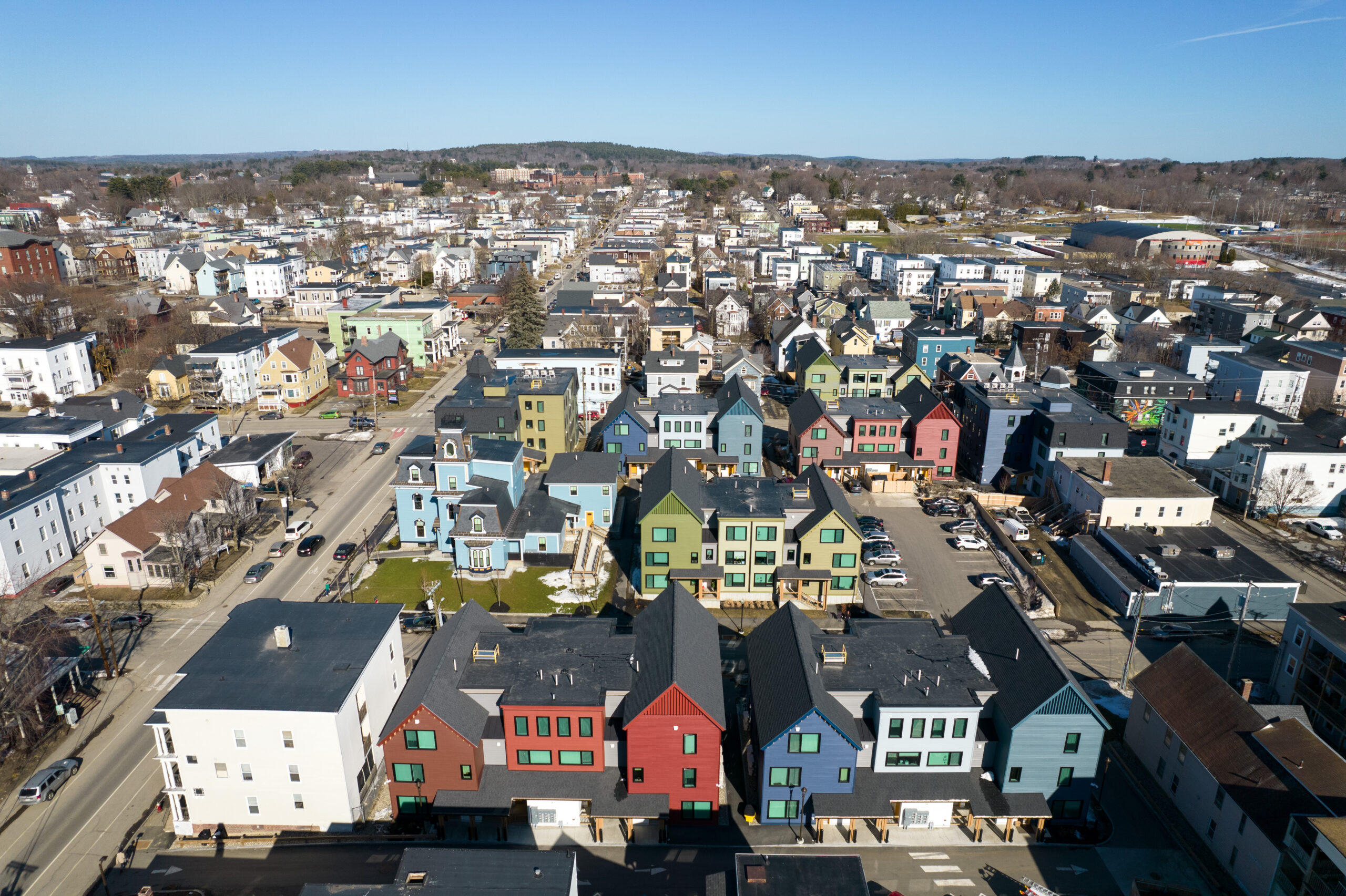
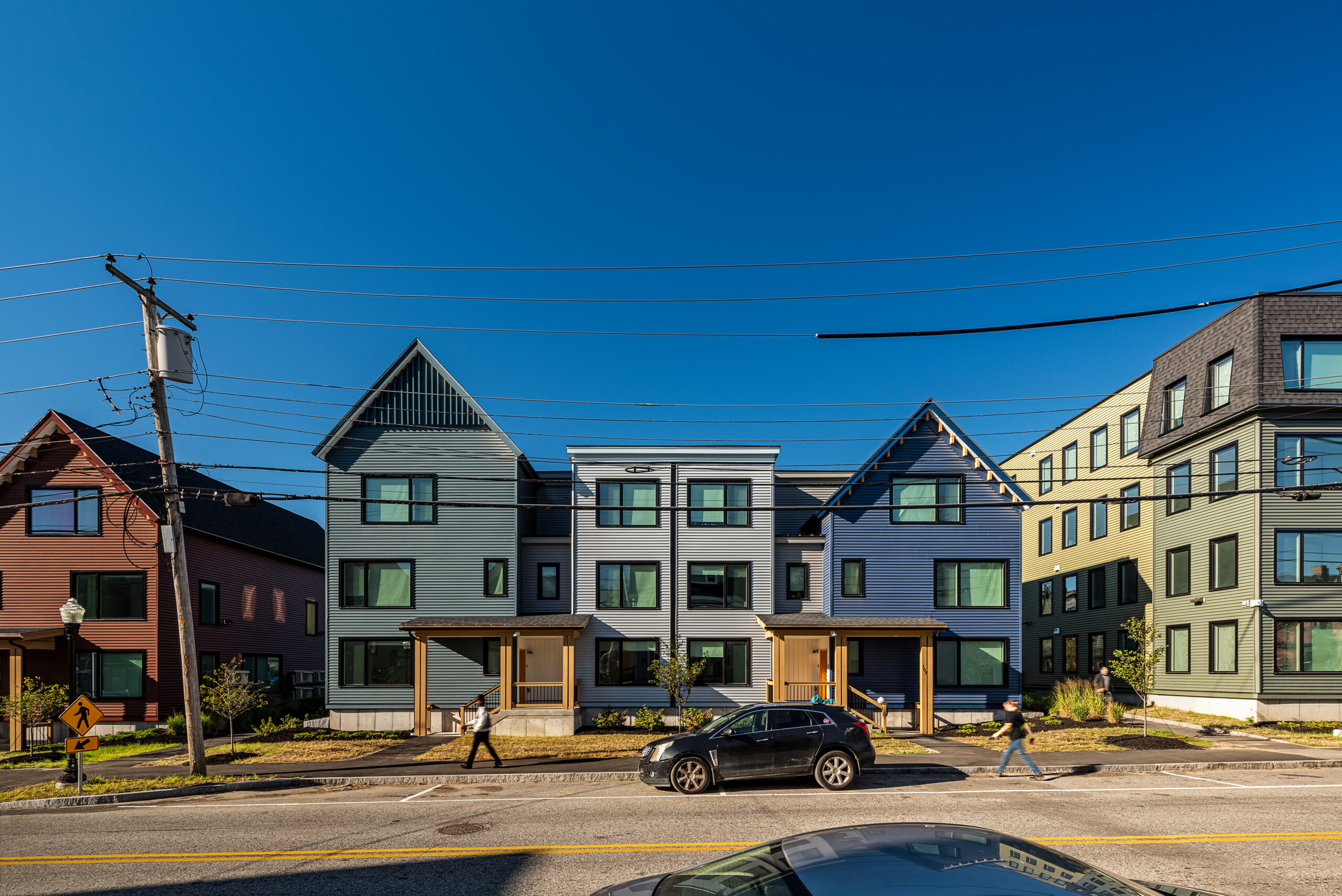
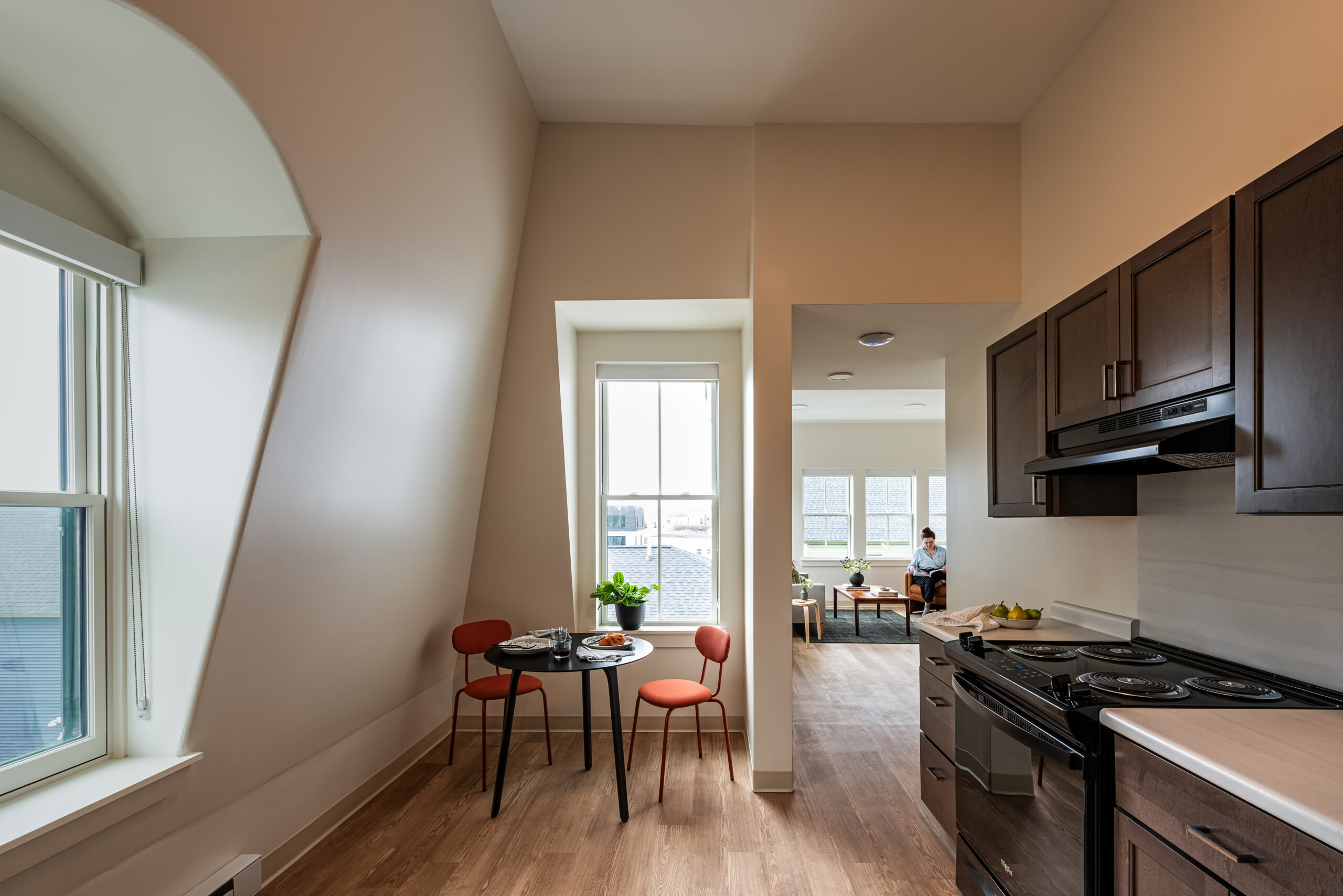
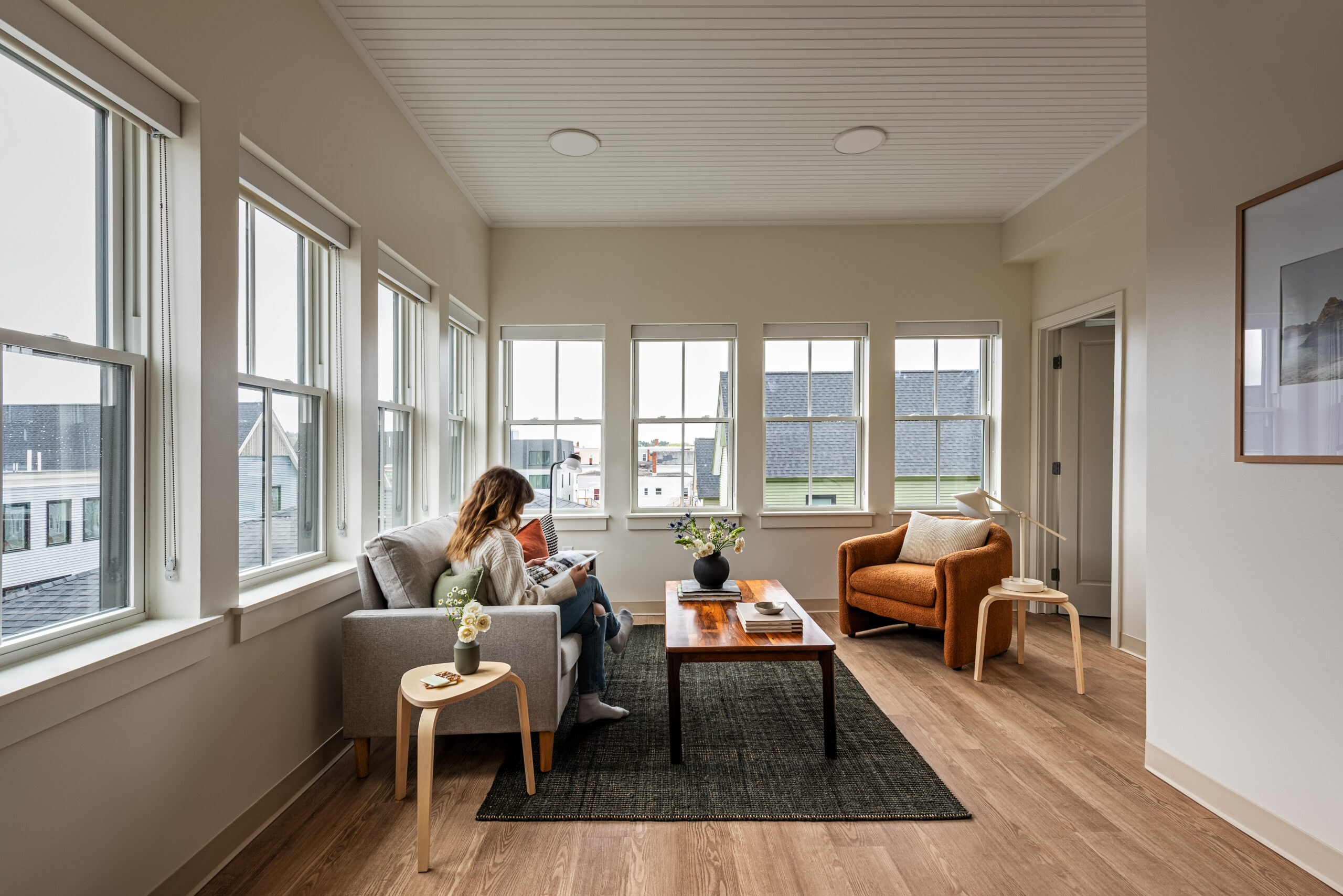
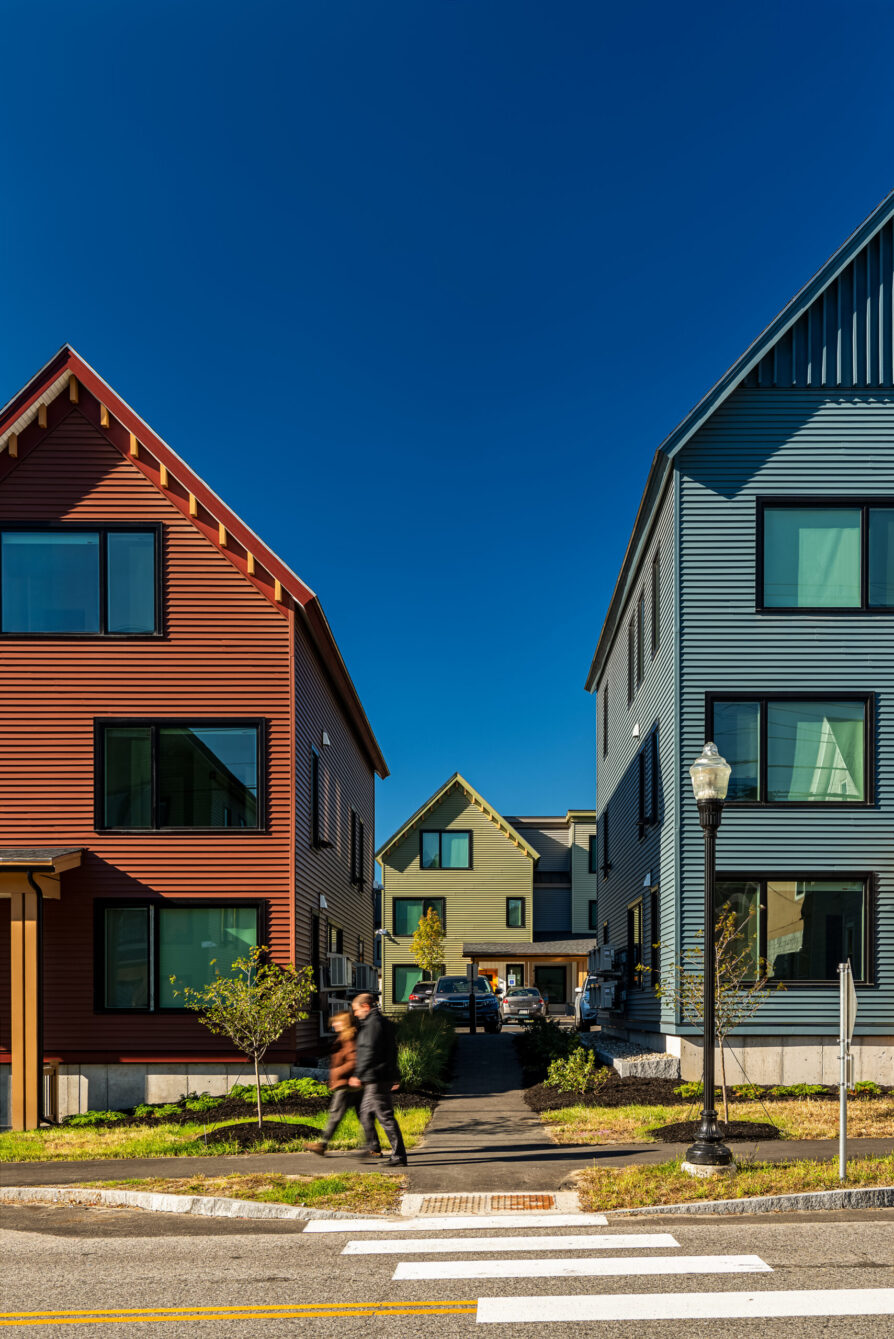
As the first advancement in the Tree Streets Neighborhood Transformation and first phase of the Choice Neighborhoods project, Wedgewood sets a precedent for context- and population-responsive design.The development adds 82 residential units – ranging in size from one to four bedrooms – across 9 buildings on 14 assembled parcels. The DeWitt development, a second phase scheduled for completion in 2026, will create an additional 104 homes and approximately 14,000sf of commercial space via two five-story buildings in the city’s downtown.
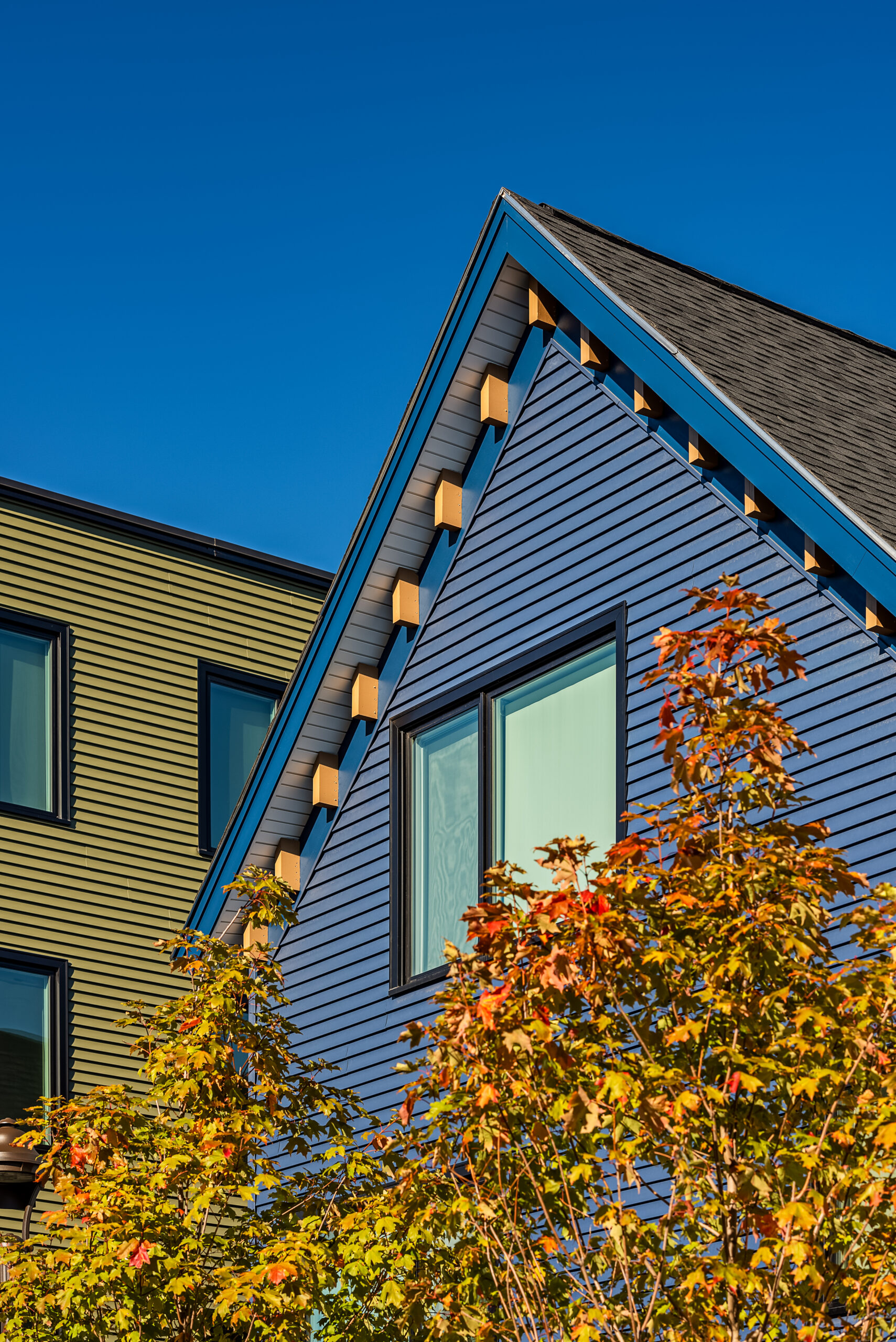
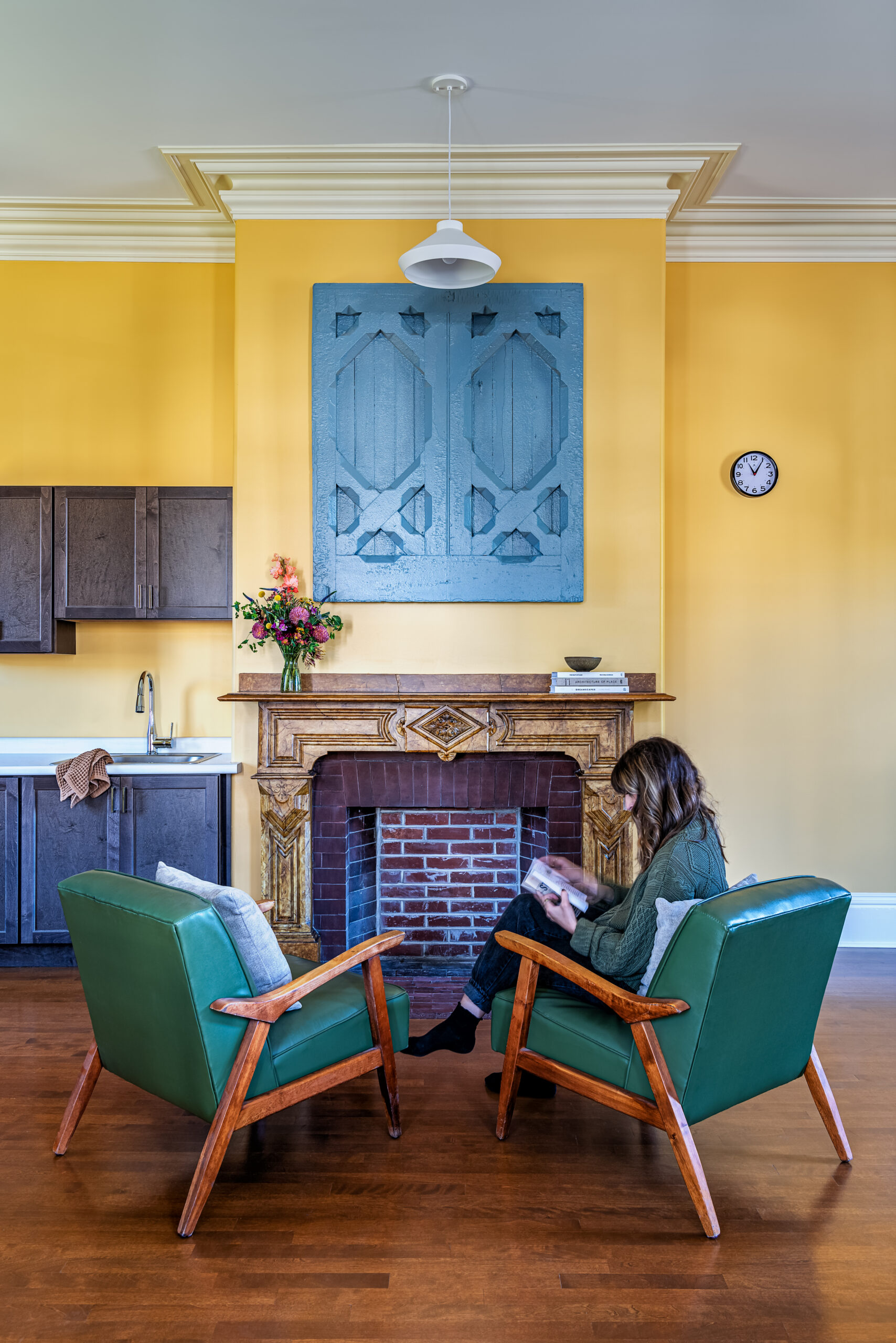
Wedgewood answers the community’s call for maintaining residential and pedestrian-oriented neighborhoods, visual variance and incorporation of color in new construction, and fresh takes on the traditional architectural features – such as the “Lewiston Turret”- that characterize the City. The development infills an existing neighborhood of traditional triple decker housing with eight- to twelve-unit buildings of similar scale.
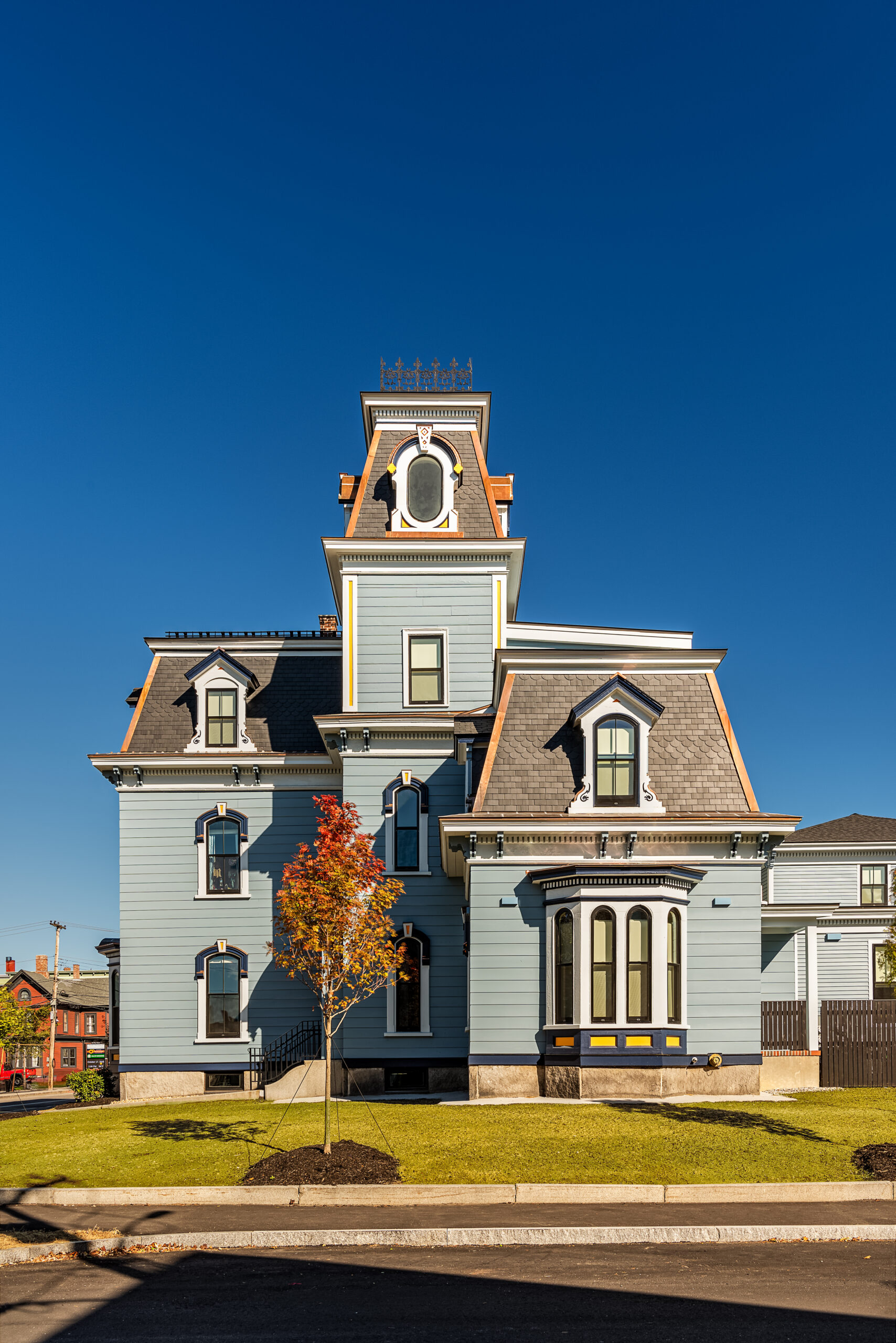
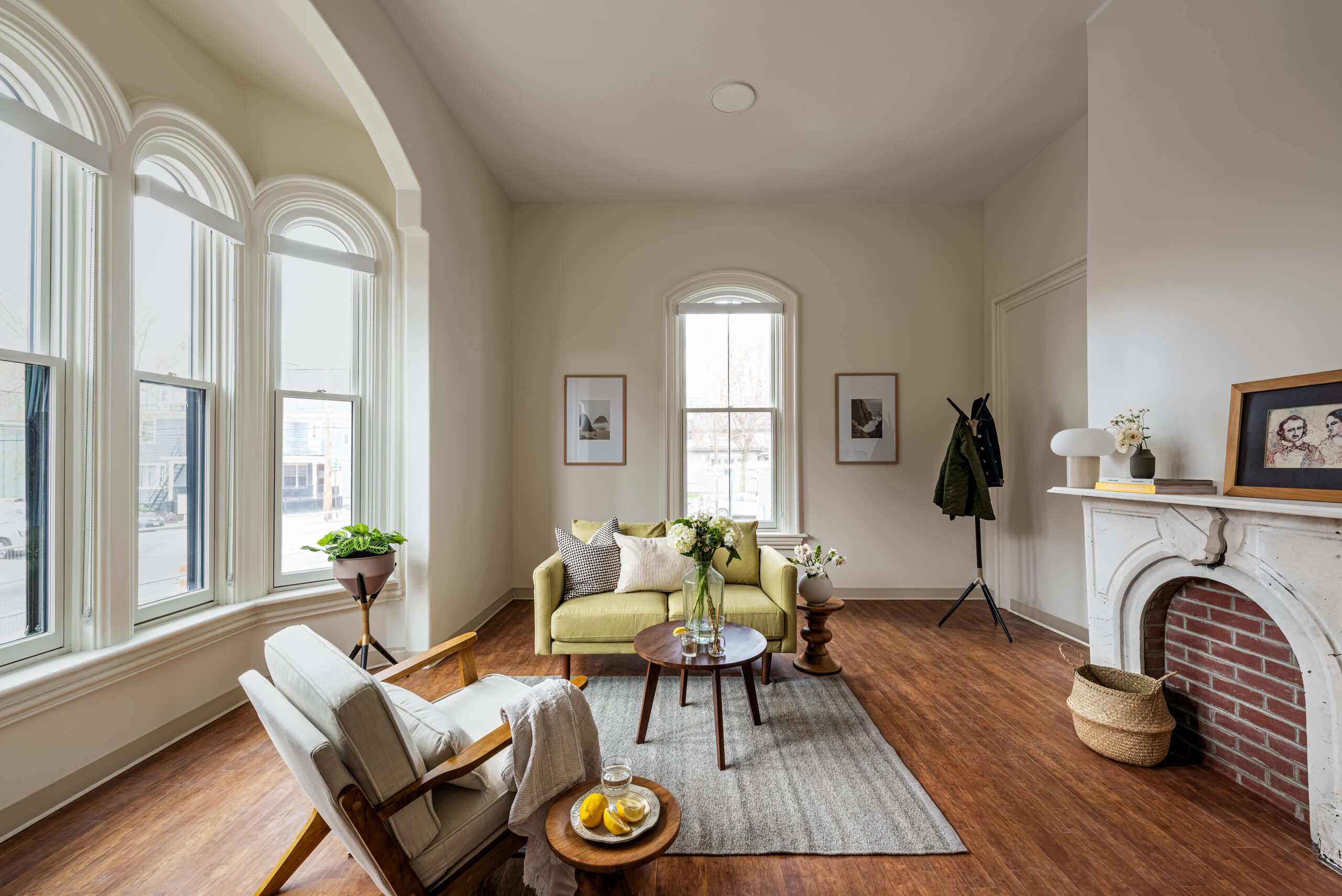
A historically significant building – the Dr. Milton Wedgewood House, circa 1873 – anchors the Wedgewood development, and was rehabilitated from its condition as an abandoned, fire-damaged funeral home into nine high-performance apartments.
Designing affordable, high-performance places for people to live and work sets a new precedent for adaptable, sustainable, and inclusive construction in a town demanding and poised to experience major social, economic, and environmental redevelopment. The resulting density supports a strong pedestrian presence, enriches economic activity at the local scale, and strengthens the community through equitable access to housing and the celebration of diverse cultures.